


Hack space Blog
First day started by meeting my lecturers and my peers in the computer lab, after the introductions Lee Scott (Course Leader) ran through a breakdown of the course and the modules and the timetable, after we started the hack space.
In this hack space session we started by
· Introduced to Raucus Caucus and brief rundown of the company and what they required as a client
· Exploring the processes of ideation
· Scoping tools and technologies of digital creativity
· Context of creative computing as a field of study
· Created a list of ideas using the rapid ideation method
· Created mood boards
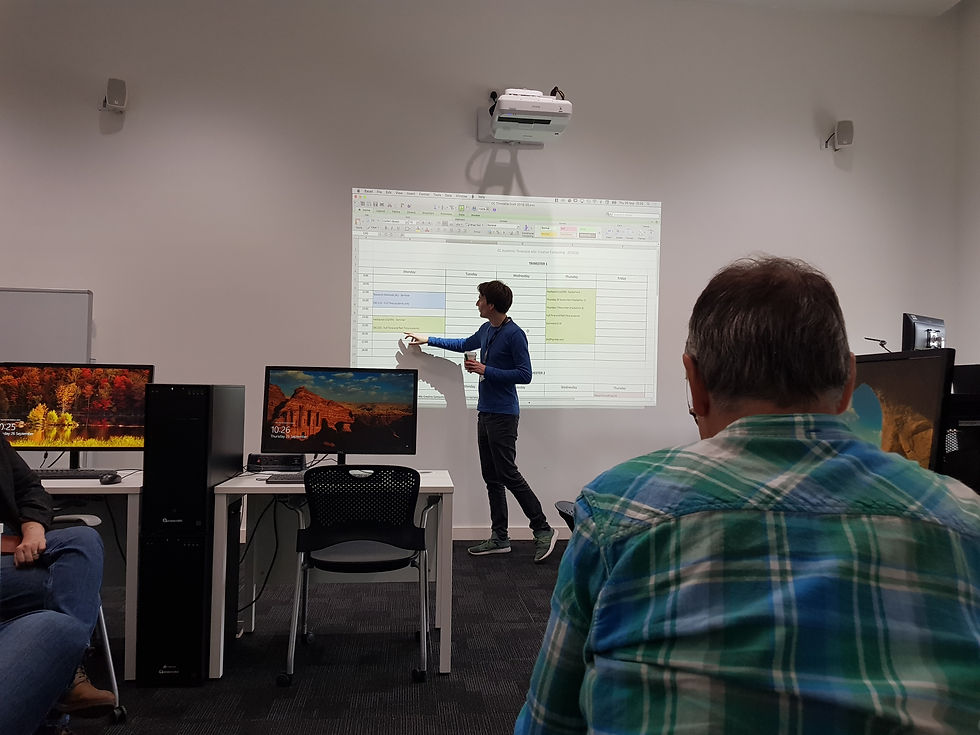
During this session the group talked about the ideation prosses and started to map out some of the different methods that we would be using, included mood boards, rapid ideation, set constraints, and then review all findings.
Context of creative computing.

Raucus Caucus Client
After we were introduced to our first client, Raucus Caucus, which is a location-based entertainment company that delivers different technologies and social games into pubs and other social environments. The client is looking for a way to achieve social cohesion with a new application or new game that can be played specifically in a pub environment.
Once we were given the brief, we then started to formulate ideas and discuss different approaches in order to provide a solution for the client. My first idea was a virtual reality playground where the players can play mini games together and also have spectators watching from a big tv. I would also like it to have dedicated cameras, to try using a new technology in an environment where you would normally see more classic games such as Pool, Darts, etc. Due to the scope of the concept, this idea started to evolve fast. Other ideas that the group started to look into, were a multiplayer pong game for mobile phones and a bespoke balance game using sensors. Once the group had five ideas, we then had to reduce them down to two concepts. At this point, the group was split into two discussion groups (Technical and Gameplay), where the two groups then discussed the pros and cons of each concept. I worked as part of the Technical group and as a group we quickly went through each idea, working on the technical feasibility but we soon noticed that both groups started to overlap into the other groups subject due to the intertwining nature of each topic area. To conclude this, both groups then shared their results with the other team.
It was then decided to split the group into two teams and create two different prototypes, using each concept investigated in the earlier discussions. I decided that working on the virtual reality (VR) social sandbox would be a good choice for me due to the fact that it will allow me to expand upon my existing skillset with VR by exploring things outside of my current comfort zone, such as multiplayer and networking and the effect this would have on creating a VR application, and therefore picked to work on that prototype.
Two Prototypes
• Virtual Reality Social Sandbox
• Multiplayer Pong
Social Sandbox VR team, the members of the group are as follows;
· Barry Lewis
· Georgina Hill
· Lewis Knight
· Luke Prosser
After the teams were assembled, our team started to ideate the core mechanics for the prototype, including features that we would like to add if time permits. Some of the ideas put forward will be very ambitious, so may need to take a lower priority in order to produce a prototype that best reflects our team’s concept for this project.

Project Name: Social Sandbox VR Prototype
Client: Raucus Caucus
Team: Barry Lewis, Georgina Hill, Lewis Knight, Luke Prosser
Brief: Develop a new game for public venues that promotes social inclusion and cohesion
Concept: Social Sandbox VR will be a multiplayer, cross-platform application with different forms of experiences and games for players to explore. For this prototype we will be looking at, at least one room and a Social Hub, where two VR players must try and escape by working out the clues, whilst other players on Android mobile phones can connect to help or hinder the VR players. The Social Hub will act as a “Lobby” for the multiplayer system, where players can connect and group up before joining their chosen game room.
After the hackspace session, my team started the developmental process by creating storyboards and working on fine-tuning our concept, after which I started to compile the project source files. This is where the project files need to be carefully setup to ensure that we have the correct SDKs for the Virtual Reality, and for the Android operating system SDKs, so that any test builds should work without issue. The big choice for us will be which version of the VR Steam SDK that the team will use, as there are many benefits and disadvantages of any version that we could use. The two main versions of the SDK that are in use are the Steam SDK 1.2.3 and the Steam SDK 2.5.0. We decided to use the older version due to the fact that as it has been released for a longer period of time, there will be more information and support available if we find that we run into any difficulties later on in the cycle of development. Additionally, there will be more documentation on known issues with integrating it with the Android SDK. The choice of Android SDK is an easier decision as we will be using the most current version of it, as by using the most up-to-date version it will increase the security of the application, and Unity will be able to use all the APIs for the current versions of the Android operating systems. After all of these core components were chosen, we then looked at what version of the Unity 3D Engine to use for the project. This is extremely important due to the stability and core functions, which can greatly vary from one version to another. For example, any version of Unity after Unity Version 2018.4.8f1 no longer support the java script language, among other changes, so making sure we are using the correct version of Unity for the project is vital, mainly because we are attempting to use many different types of mechanics in the prototype. Also, since our approach will be a modified version of the SCRUM methodology, we will be integrating each other’s project files together amongst the team at key stages of development.
The team has split the tasks and decided to play to each of our strengths (which we outlined in the first session) whilst simultaneously pushing ourselves outside of our respective comfort zones. I will be working on the VR player side of the application, along with the multiplayer and networking. Georgina will be looking at cross-platform integration, and interactivity mechanics for the individual rooms. Lewis will be doing level design, and Luke will be doing textures for the application.
Comments